Blog

Congressman Lieu Youth Advisory Council: Climate and Health Related Policy Discussions

Today was particularly exciting for me at our advisory council meeting. The topic of the day was climate change. We discussed Cap and Trade, the Carbon Tax, banning offshore drilling, disaster mitigation, the Climate Solutions Act, and other potential legislative solutions.

On January 9, 2019, Congressman Lieu and Congressman Jimmy Gomez introduced the Climate Solutions Act of 2019. “It encourages strong renewable energy standards.” It also “aggressively targets greenhouse gases by requiring such emissions to be 80 percent below 1990 levels by 2050.” Finally, it “creates a national energy efficiency standard.”

As I have learned recently from taking online college courses, pollution kills millions of people each year around the globe. The environment impacts our health in ways most don’t consider. It is time we all make an effort to keep our environment and ourselves healthy.

As Congressman Lieu says, “there is no threat greater to our nation’s security than climate change. Failing to protect our planet will endanger the lives of millions, hurt our economy and jeopardize our children’s future. The wildfires in my district were worsened by drought conditions and are a sliver of what is in store if we fail to act.”

Most people don’t consider the health ramifications of the environment. As Congressman Lieu points out, wildfires are affected by climate change and drought. People die in wildfires. The health impacts of our environment are real — they are not fake. They should be taken seriously by everybody.
Student Action Club: a New Greenhouse and a Positive Health Effect

As Vice President of this club of approximately 20 students which meets once per week, I am proud of our recent efforts to facilitate the construction of an on campus greenhouse. Our club is dedicated to the environment, health, and issues related thereto.

Actions speak louder than words, and we lobbied our school officials and received support to build a campus greenhouse. We wanted to promote a healthy environment and healthy living. To that end, we also successfully raised enough funding to move forward with this project. In doing so, we also educated the student body as to the positive health effects of a clean environment.

Leveraging what I have learned from past legislative endeavors, we were able to implement a fundraising initiative from start to finish, the result of which will be a happier, healthier environment. I look forward to our next step in this project –the construction of our greenhouse. Stay tuned.

Pearls Before Swine — Even the Pig Understands Environmental Catastrophe

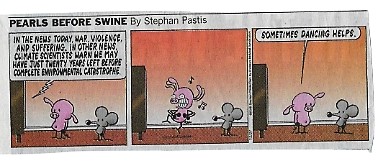
My favorite comic strip has always been Pearls Before Swine.  I find it’s dark humor and sarcasm intoxicating.  In this strip, even the typically slow witted pig understands the future environmental catastrophe awaiting us all if nothing is done to prevent the damage we are inflicting upon ourselves.  The strip equates environmental concerns with war, violence, and suffering.  Even now, millions of people die each year around the globe from air pollution and other toxins.  In this case, we can all learn from the Pig and do more than dance to protect the environment and thereby ourselves.

Vice President of the Student Action Club: Dedicated to Environmental, Health, and Other Issues Related Thereto

I recently was voted into the position of Vice President of this club and replaced the incumbent VP. The club meets once a week. It is a club at my school comprised of about 20 students and is dedicated to the environment, health, and issues related thereto.

I am honored to have been selected to help lead this club, and look forward to serving in this position. Thanks to all who voted for me. I will do my best.

College Level Course: Air Pollution — A Global Threat To Our Health, University of Copenhagen

I completed this three week college level course today, taught in part by Steffen Loft (Head of Department, Doctor of Medical Science), Peter Moller PhD (Professor), and Zorana Jovanovic Andersen PhD (Associate Professor), of the University of Copenhagen on Coursera.  This course addressed sources of air pollution, composition of air pollution, and the health effects of air pollution.  It discussed epidemiological principles of air pollution, vulnerable groups, the global burden, and suggestions regarding what to do about this looming crisis.  Millions of people die from air pollution, both indoor and outdoor.  Particulate matter and other chemicals gets into the body, and these chemicals affect our health.  I was stunned to learn how many people around the world are impacted by unclean air.  This course piggybacked with my recent observations at the University of Southern California.

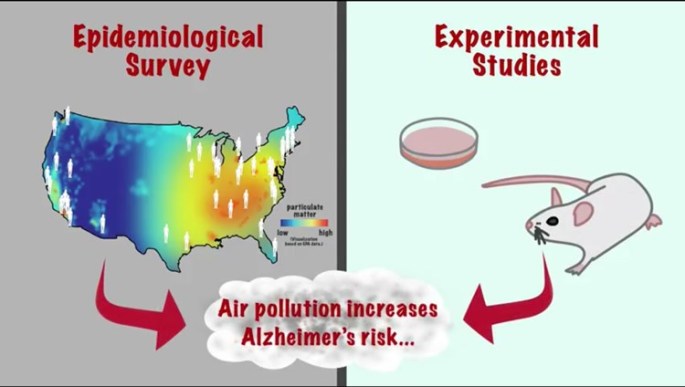
At the University of Southern California, I have recently met with Dr. Caleb Finch, PhD, of the Leonard Davis School of Gerontology, and graduate students of Drs.  Constantinos Sioutas, PhD, of the Viterbi School of Engineering, and those of Dr. Finch.  They are performing inhalation exposure studies in which they expose mice to traffic emitted nano-particles and determine neuro-inflammation in their brains.  It has been fascinating and a privilege to observe their ongoing experiments, which let me to take this course to learn more about the health affects of air pollution.  I recommend it to all those interested in this subject area.

LA Comic Con — Where Are The Environmental / Health Comics?

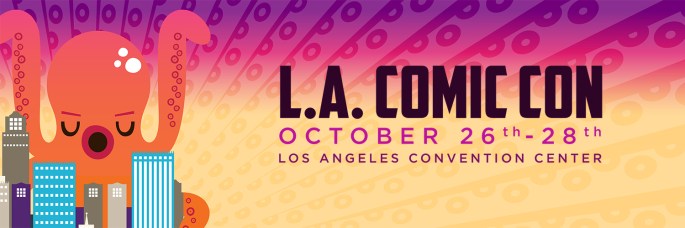
I attended the Los Angeles Comic Convention this morning.  It was super fun, as it has been for many years.  The layout was much more efficient than last year.  There was an anime section, a horror section, a fantasy section, a sci fi section, a steampunk section, and a cosplay section.  I thought to myself, wouldn’t it be cool if there was a section devoted to social issues, such as to the environment, to health, and/or to environmental health.  Comics, cartoons, and graphic novels exist with these types of issues.  I understand these topics may not captivate comic traditionalists, but they would likely appeal to those with an open mind.  They are fun to read, and better yet, they address real and substantive issues.

Heal the Bay Clean-Up: Environmentally Safe and Scenic

Santa Monica pier at sunset, Los AngelesA beautiful day at the beach today! My brother and I joined a local Heal the Bay clean-up event today.  We met in Santa Monica near the pier and picked up garbage left on the beach.  It is truly amazing how many harmful items are discarded without regard for the health or welfare of others.  If you want your local beaches clean and free from harmful pollutants, click here to find out how you can help.
Attend Mouse Exposure Study at USC

Today was another interesting day at the University of Southern California.  I am observing ongoing mouse inhalation studies being conducted to determine what health impacts there are to mice exposed to traffic air pollution.  Mohammad Hossein Sowlat, a senior PhD student in Dr. Constantinos Sioutas’ group, showed me around.  Amir Mousavi Nasabi Shams, another PhD student in Dr. Sioutas’, group assisted.  It is fascinating to witness the ongoing studies, which are only possible via the collaboration by multiple groups, including engineering, gerontology, and medical.  I look forward to monitoring the studies and seeing the ultimate results and conclusions.  It is shocking to consider the detrimental health effects from exposure to pollution.

Leukemia and Lymphoma Society Panel Discussion in Philadelphia: Accelerating to Cures – Prevention, Precision Medicine, Immunotherapy

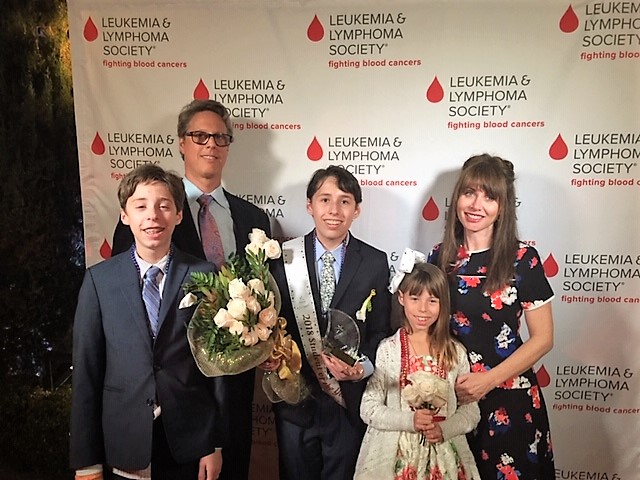
As winner of the Student of the Year Competition for the entire Los Angeles region (a philanthropic leadership development program for select exemplary high school students), and for finishing 8th nationally with over 600 candidates participating nationwide, I was invited to join in Philadelphia a select group of scientists funded by the LLS at a panel discussion entitled: Accelerating to Cures:  Prevention, Precision Medicine, Immunotherapy.  The panel was facilitated by the Chief Scientific Officer at The Leukemia & Lymphoma Society, Lee Greenberger, Ph.D. Afterwards, I met with LLS funded researchers and other top fundraisers and LLS supporters from across the country.

Being invited to this intimate gathering was an honor, and it was my privilege to attend. I met Drs. Lee Greenberger (Chief Scientific Officer LLS), Yong-Mi Kim (Associate Professor of Pediatrics and Pathology at the Children’s Hospital Los Angeles), Ronald Levy (Director of the Lymphoma Program at Stanford University School of Medicine), Noopur Raje (Professor at Harvard Medical School and Director of the Center for Multiple Myeloma at the Massachusetts General Hospital Cancer Center), and Anas Younes (Chief of lymphoma Service at Memorial Sloan Kettering Cancer Institute).

The cause of most cases of Leukemia is not known. High doses of radiation and certain cancer therapies are possible causes. Exposure to benzene may be a cause. Auto exhaust and industrial emissions account for about 20 percent of the total national benzene exposure (LLS Data). About half of US benzene exposure results from tobacco smoking or exposure to tobacco smoke. Research is also focusing on identifying genes that might predict Leukemia, thus resulting in strategies to prevent it in the future. Environmental impacts, therefore, cannot be ignored and must be considered when discussing prevention, treatments, and cures.