I completed this very interesting six week college level course today, taught in part by Dr. Megan Weil Latshaw, PhD, and Beth A Resnick, MPH, of Johns Hopkins University on Coursera. This course discussed, among other things, chemicals, exposure (bio-monitoring), risk assessment, environmental health effects, policies, and case studies. Chemicals are everywhere, and part of most everything. They are in our bodies, our food, our homes, and our environment. Interestingly, the dose makes the poison. Even toxic substances might not be harmful if taken in a low dose; water, if taken in the right dose, is harmful. Natural doesn’t mean healthy. In fact, many natural substances are harmful, and in the right dose, deadly. They affect each person differently, and generally speaking they have a greater affect on the young and elderly. This course made abundantly clear that chemicals are needed, but must be appropriately understood and regulated. There are agencies in place at local, state, and federal levels, to address these concerns. This course put in perspective the good and bad of chemicals in the environment and on our health.
Author: calebjmoss
Volunteer Work at ReDiscover Center
I volunteered today at the ReDiscover Center. This is a really great place that uses recycled materials for educational and creative purposes. Through the use of waste materials, environmental sustainability and health is one step closer to becoming a reality. My time was spent sorting through waste materials, and selecting those which will ultimately be used to create art, for environmental education, and for tinkering programs. It never ceases to amaze me how much waste there is, and how much of it ends up in our environment. We wore gloves, and were careful to protect ourselves while sorting. Unfortunately, when this waste ends up in our environment, a lot of people are not so well prepared and suffer health consequences as a result.
Environmental Health Impact Studies from USC
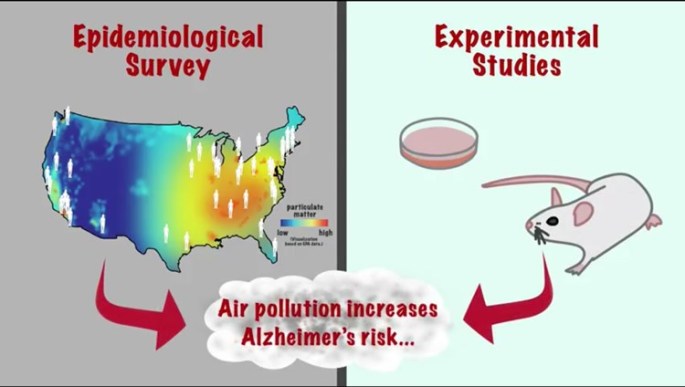
I reviewed today some of the most recent papers that Dr. Constantinos’ group and Dr. Finch’s group published in collaboration. One of Dr. Constantinos’ senior PhD graduate students (Mohammad Sowlat), sent them to me last week. Please see below. They are quite interesting. I’m amazed by the potentially severe health consequences which can result from exposure to the environment. I have long wondered what caused me to develop ALL (Acute Lymphoblastic Leukemia) in the 5th grade. While the specific cause is not know, environmental factors which might trigger a negative biological response is one reasonable explanation. Hopefully, it will be better understood in the future as more research is conducted.
- Traffic-related air pollution impact on mouse brain accelerates myelin and neuritic aging changes with specificity for CA1 neurons
- Particulate air pollutants, APOE alleles and their contributions to cognitive impairment in older women and to amyloidogenesis in experimental models
- freeradbiomedAging attenuates redox adaptive homeostasis and proteostasis in femalemice exposed to traffic-derived nanoparticles (‘vehicular smog_)
Volunteer Work at ReDiscover Center
I volunteered today at the ReDiscover Center. This is a really great place that uses recycled materials for educational and creative purposes. Through the use of waste materials, environmental sustainability and health is one step closer to becoming a reality. My time was spent sorting through waste materials, and selecting those which will ultimately be used to create art, for environmental education, and for tinkering programs. It never ceases to amaze me how much waste there is, and how much of it ends up in our environment. We wore gloves, and were careful to protect ourselves while sorting. Unfortunately, when this waste ends up in our environment, a lot of people are not so well prepared and suffer health consequences as a result.
Observe Mouse Exposure Study at USC
Today was both very cool and interesting. I had the privilege of observing ongoing mouse inhalation studies being conducted to determine what health impacts there are to mice exposed to traffic air pollution. Mohammad Hossein Sowlat, a senior PhD student in Dr. Constantinos Sioutas’ group, showed me around. From collection of polluted air from the 110 Freeway, to the exposure machines, to the mouse dissection, were fascinating to witness. The studies comprise multiple groups, including engineering, gerontology, and medical, all which must work in collaboration. I look forward to monitoring the studies and seeing the ultimate results and conclusions.
Volunteer Work at ReDiscover Center
I volunteered today at the ReDiscover Center. This is a really great place that uses recycled materials for educational and creative purposes. Through the use of waste materials, environmental sustainability and health is one step closer to becoming a reality. My time was spent sorting through waste materials, and selecting those which will ultimately be used to create art, for environmental education, and for tinkering programs. It never ceases to amaze me how much waste there is, and how much of it ends up in our environment. We wore gloves, and were careful to protect ourselves while sorting. Unfortunately, when this waste ends up in our environment, a lot of people are not so well prepared and suffer health consequences as a result.
Graduate Lab at USC with Drs. Caleb Finch PhD and Constantinos Sioutas PhD Groups
I had the wonderful opportunity to attend a lab meeting with Dr. Caleb Finch, his graduate students, and some of Dr. Constantinos Sioutas‘ graduate students today at the University of California in the Leonard Davis School of Gerontology building. They are performing studies testing the health impacts of air pollution. I was introduced to Dr. Sioutas by way of Dr. Pat Levitt at Childrens Hospital Los Angeles. Dr. Levitt is the Chief Scientific Officer at CHLA, and the Director of the Saban Research Institute at CHLA. He is also a professor at the Keck School of Medicine at USC. Dr. Levitt reached out to Dr. Sioutas on my behalf. I am very thankful to him for his assistance. The lab meeting was extremely interesting. The level of scientific knowledge was incredible. The team invited me to attend lab exposures of mice to see what impacts pollution has on them. I can’t wait to observe these actual experiments.
Environmental Science 9 Day Summer Program, University Of Washington
I spent the past week, July 17-25, 2018, at the University of Washington, immersed in an environmental and sustainability program. Student scholars are selected to participate from across the United States and from more than 70 different countries based upon academic excellence, extracurricular involvement and demonstrated leadership ability. Each student is recommended and nominated by his/her high school. We stayed in the dorms on the University of Washington Campus. This 9 day intensive immersion program was an incredible experience.
We explored many different careers that intersect with our natural resources. Through visits to sustainable farmlands, a wolf sanctuary, and Mt. Rainier National Park, we gained an understanding of how to take an active role in creating a sustainable future.
One of our guest speakers, Dr. Julian Marshall of the University of Washington Department of Civil and Environmental Engineering, was fascinating and caught my attention. Dr. Marshall’s research is at the intersection of air quality engineering and public health: understanding how much pollution people breathe, and how to reduce those exposures. His specific areas of focus are (I) mechanistic and empirical modeling of air pollution, to understand how concentrations vary in space and time, and how concentrations and health impacts would change in response to changes in emissions. (2) measuring and modeling air pollution exposures in developing countries (at present, mainly lndia), including how exposures change in response to interventions. (3) environmental justice: understanding who is more exposed or less exposed to air pollution, how those exposures correlate with demographic attributes such as race and income, and how exposure disparities might shift if emissions from specific sources were to increase or decrease.
It was this program and Dr. Marshall, in part, that let me to seek out opportunities at the University of Southern California to observe ongoing air pollution and related health impacts studies being performed by Drs. Sioutas and Finch and their respective teams of graduate students.
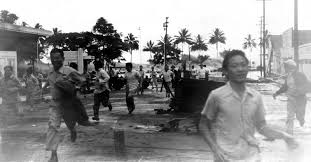
Pacific Tsunami Museum: Environmental Health Impacts Related Thereto
The Tsunami museum in Hilo is very interesting. It is dedicated to educating people regarding the dangers of tsunamis, and it serves as a memorial to those who died from these dangerous environmental events. In addition to exhibits on Hilo tsunamis, the museum educates on tsunamis around the world.
In addition to learning science related to tsunamis, I found it very interesting to consider the health impacts of these natural disasters. In addition to drowning and traumatic health effects directly related to the tsunami itself, indirect health concerns include food, medical care, clean drinking water, and shelter.
It is fascinating to consider what effects the environment has on human health vis-à-vis tsunamis. For example, fracking may cause seismic activity, earthquakes, and tsunamis. Construction along coastlines deplete natural barriers to tsunamis. Creating reservoirs over fault lines may cause earthquakes and tsunamis Mining can cause instability and collapses, leading to earthquakes and tsunamis.
The Tsunami Museum is an interesting place to visit and learn if given the opportunity.
Toxic “Vog” in Paradise
I had seen video on television, and I had read about this in the newspapers, but experiencing Vog was different. Vog is a form of air pollution that results when sulfur dioxide and other gases and particles emitted by an erupting volcano react with oxygen and moisture in the presence of sunlight. The word is a portmanteau of the words “volcanic” and “smog”.
When I got off the plane for our family vacation, it seemed like it was a little foggy. However, the sky was grey, and not bright blue. The smell wasn’t fresh, rather, it was like a burning cigarette. While I breathed without extraordinary effort, however, I did feel as if I wasn’t at full pulmonary capacity. My eyes were itchy most of the time. I even heard other guests at the hotel ask for referrals to local doctors due to breathing problems. No doubt, this Vog was not healthy.
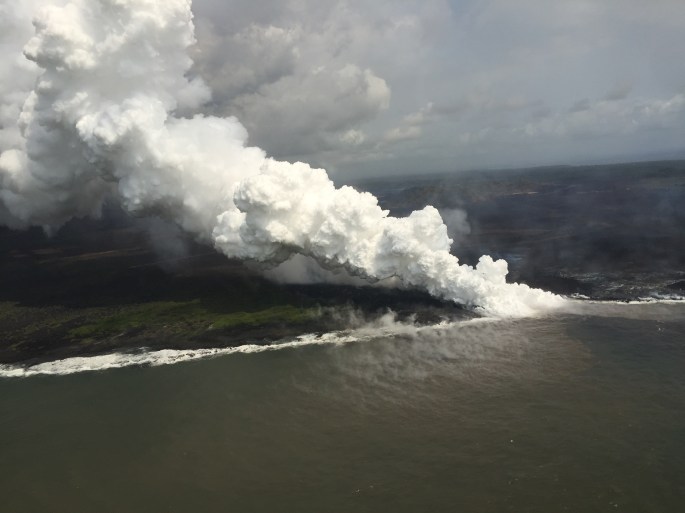
Although Hawaii Volcano National Park was closed, I had the wonderful opportunity to learn about and experience Mt. Kilauea first hand. Please see some photos I took below taken from a helicopter. Mother nature is truly spectacular!