Attended Alfred E Mann Foundation Grant for Cancer Research and a New Research Facility for Zebra Fish to Study Environmental Causes of Cancer

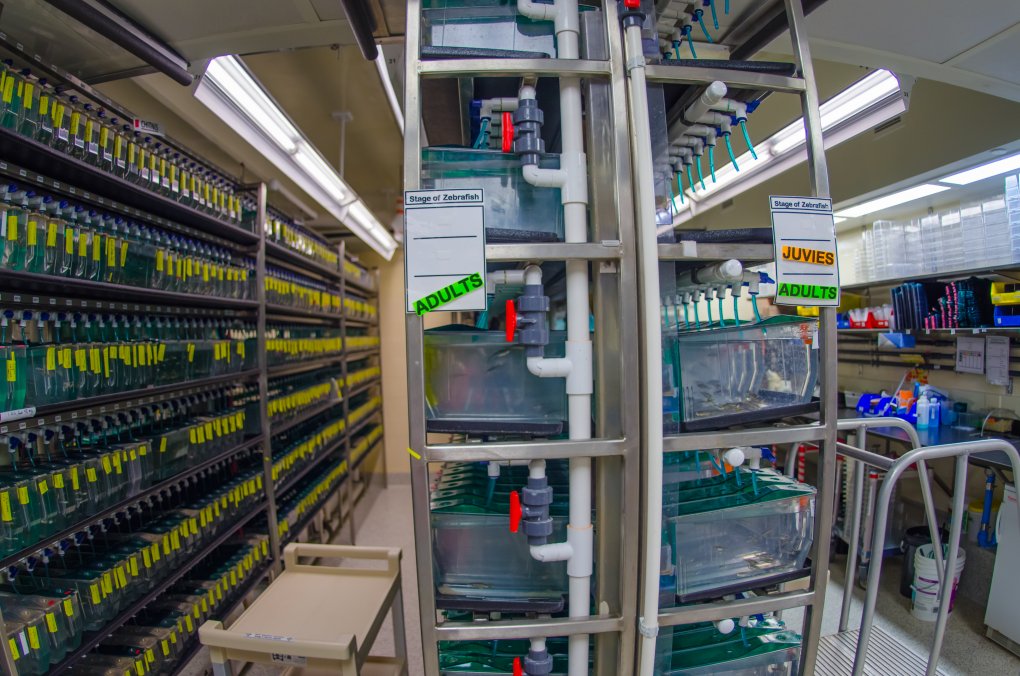
I was honored to attend this event today at Children’s Hospital Los Angeles, honoring Dr. Alan Wayne as the new Chair of the Alfred E Mann Endowment in cancer research. The Mann Foundation also funded a new research facility which will focus on research conducted via Zebra Fish.

More and more chemicals enter our environment, and in turn, there are greater health impacts resulting therefrom. Toxins can cause a great many diseases. Zebra fish are a great medium to study toxins. They breed fast, and they are transparent. This grant will fund a large facility with Zebra Fish tanks to study cancer, particularly environmental impacts such as chemicals and how they affect our body. This is a really cool step forward in medical research.

This is a fantastic step forward in gaining knowledge about how the environment impacts health.

USC: Dr. Todd Morgan, PhD, and I Observe Ongoing Mouse Pollution Inhalation Studies

  • I met with Dr. Morgan in his office located in the Leonard Davis School of Gerontology. It is an amazing feeling to walk around such a prestigious campus, knowing I am meeting with a top thinker in his field.
  • Dr. Morgan first took me to see the rat exposure lab. In the experiment, exhaust collected from the 110 freeway near USC was funneled into tanks containing male and female mice. It is surreal to think that these mice are being tested with the very air we breath on the freeway daily.
  • Dr. Morgan next took me to see the memory testing room. There, he showed me the different machines they use to measure the memory of the mice after they had been exposed to air pollution. In one of the machines, they had a large wheel with pathways extending from the center of the wheel. The researchers put treats in one of the pathways and let the mice find it. They would spin the wheel and see if the mice could remember where the treat was by looking at different visual markers.
  • The next machine was a maze. It was a large metal box with connecting corridors. It contained treats, and it had the ability to shock mice. Mice were put in the box to see if they could find the treats. If the mice went the wrong way, they were shocked. This maze was used to test whether the mice could remember where the treats were and if they could remember where they got shocked.
  • The next machine was a treadmill. This was to test the physical strength of the mice. In the machine, the mice would be forced to run or be electrically shocked so researchers could monitor the physical conditions of the mice.
  • While studies are ongoing, mice showed increased risks of Autism, decreased strength, and memory loss. The environmental impact of the air we breath can have detrimental effects — particularly when concentrated in this fashion. Most people don’t think about this, but their very health may be in jeopardy. Much more research is needed to see what other effects the environment has on health.

Let There Be Water: An Example For All That Environmental Health Problems Can Be Solved

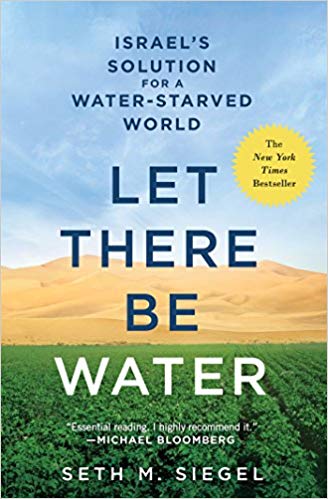
I’m very excited to go to Israel this summer. Each summer for years, we have traveled someplace that interests each member of my family. For me, I am looking forward to seeing a country that is a shining example of how to produce something out of nothing. I recently read the novel, “Let There Be Water,” in anticipation of my upcoming trip.

This novel is extremely interesting. Not only is Israel a leader in cutting-edge technology of all sorts, it is has miraculously solved its water problem. In the desert, Israel has learned how to not only provide enough water for its own people, it has assisted its neighbors as well — including Jordan, Iran and China.

If a country can create usable water in the desert, it is not that long of a reach to believe that other environmental issues, particularly those that impact our health, can be addressed and solved.

I look forward to witnessing first hand these novel technologies in the hopes of applying my new knowledge to environmental health issues of all kinds.

Congressman Lieu’s Youth Advisory Council’s 9th Meeting this Year: From Policy Discussions on Gun Violence Prevention to the Environment and Health Impacts Related Thereto

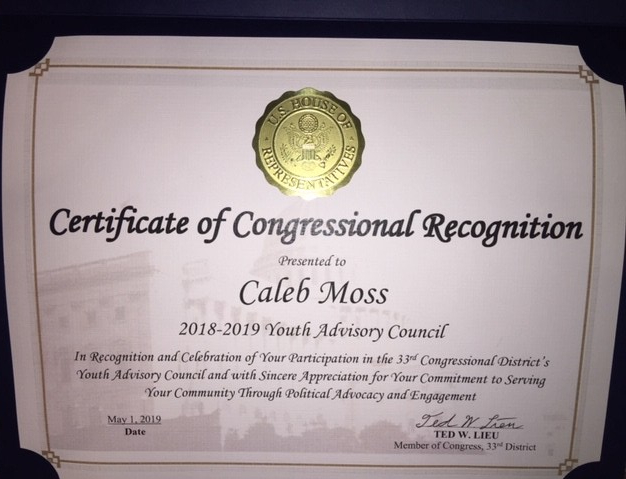
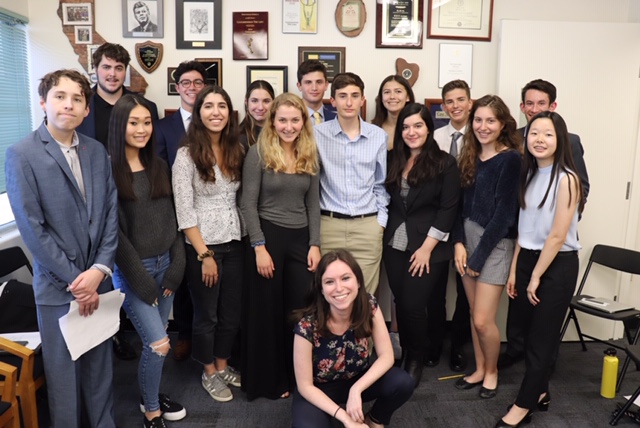
Today, our last meeting this school year was a bitter sweet meeting of our Youth Advisory Council It has been an amazing two years so far serving on this council. I have learned so much from all concerned.

Today our focus was on, among other things, the following: policy discussions regarding gun violence, including background checks, a ban on assault weapons, gun trafficking prevention, gun trafficking prevention, funding gun violence research, safe gun storage, and other potential legislative solutions. Today we reflected upon this past year, and conversed about all we had accomplished.

At my behest, discussion turned to potential legislative solutions to growing environmental concerns and health impacts related thereto. To the extent possible, I always make an effort to bring these issues to the forefront. I think most people are unaware that environmental issues necessarily concern health impacts. I believe that if people were educated on this point, more people would be interest in finding solutions to environmental problems of today.

USC Mouse Exposure Studies — Next Phase Observations at the On Campus Aerosol Laboratory

I was excited today to witness the next phase of this ongoing study looking into the health effects of air collected near freeways in Los Angeles. The study is being conducted by USC’s Dr Finch in conjunction with USC’s Dr Sioutas, and their respective groups. They are also getting assistance from USC medical researchers. I met today with Amirhosein Mousavi Nasabi Shams (Amir), a PhD student working with Dr. Sioutas in the aerosol lab. His office, along with many involved, is in the Ronald Tutor Hall building. The aerosol lab is in the Ray Irani Hall building. It is with great pride that I walked from building to building at this great university. Thank you Amir for your knowledge and kindness. Both are greatly appreciated.

Once air is collected, USC environmental engineers create devices to expose mice to the air. After exposure, USC medical students dissect the mice to determine what, if any, health effects are observed.

“The major objective of our work at the USC Aerosol Lab is to investigate the underlying mechanisms that produce the health effects associated with exposure to air pollutants generated by a variety of sources, such as traffic (including light and heavy duty vehicles, natural gas.”  The lab seeks to “understand how toxic mechanisms and resulting health effects attributable to these air pollutants vary with their source, chemical composition and physical characteristics.”

Investigation is still ongoing. This new phase repeats the process with new mice. Results are not compiled, and conclusions are not made, until the study is complete. That said, exposing mice to toxic air is anything but healthy.

I look forward to my next visit with Drs Finch’s and Sioutas’ groups at USC. Their work is truly amazing.

Congressman Ted Lieu Youth Advisory Group Meeting — Environmental Health Concerns

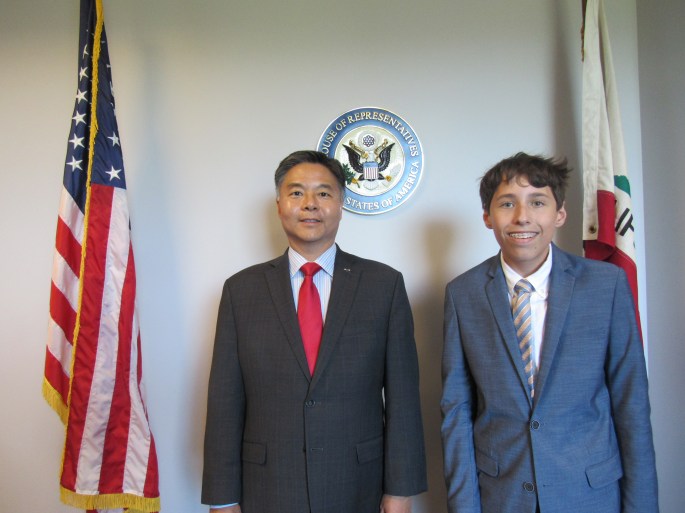
I look forward to my youth advisory group meeting with Congressman Ted Lieu tomorrow. It is an honor and privilege to be part of this group. Meeting with the Congressman is an amazing experience. Interacting with our political process first hand, and being an active part in finding solutions to issues of concern, is incredible.

Congressman Lieu is extremely intelligent and thoughtful. I am excited to hear more about his Climate Solutions Act of 2019. This act “encourages strong renewable energy standards by requiring that 100 percent of electricity sold in the United States be generated from renewable sources by 2035. It also aggressively targets greenhouse gases by requiring such emissions to be 80 percent below 1990 levels by 2050.” While I believe I know why, I am also interested in hearing first hand why the Congressman believes nuclear, fossils with CCS (carbon capture), and biofuels should be excluded from any Green Deal.

Targeting greenhouse gases is imperative not only for the environment, but for our health. As I’m learning from many sources, including observations of ongoing aerosol studies at USC focusing on the health effects of air pollutants, pollution is more than a dirty issue; rather, it is a real and substantive health issue around the world. Literally, millions of people die from pollution each year.

Since my battle with Leukemia began almost 6 years ago, I have been increasingly more aware of and interested in environmental impacts on health. My focus began with possible environmental causes of Acute Lymphoblastic Leukemia, and has expanded to other health issues impacted by the environment. As Congressman Lieu said, ” Failing to protect our planet will endanger the lives of millions, hurt our economy and jeopardize our children’s future.”

Learning first hand how to implement policy change in an area which is both interesting and important to me is quite satisfying. I hear from a lot of people that things should be different, but I don’t see a lot of action. This advisory group is part of a solution to the problems of today. I am fortunate to be a member.

My Personal Non-Profit Charitable Fund, Dedicated to the Health Impacts of the Environment, Was Officially Created Today!

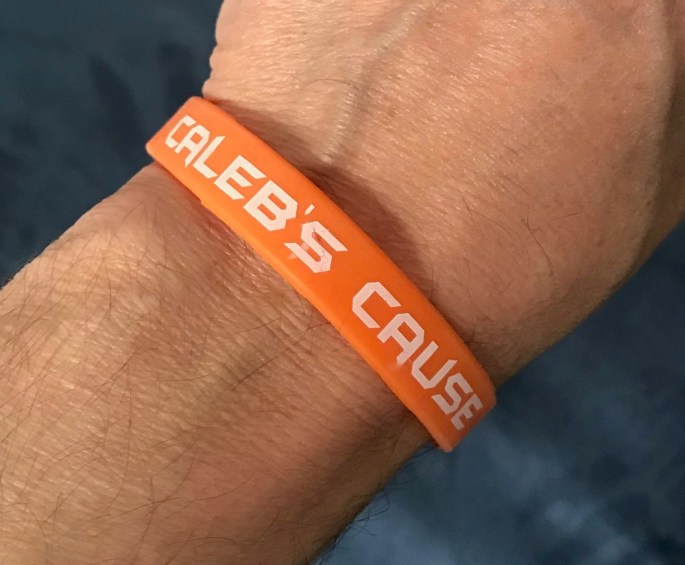
It’s official name is “Caleb’s Cause: Environmental Health Impacts Fund.” This is a crowning achievement of mine, both intellectually and philanthropically. I funded and created this fund to help determine the causes and cures for diseases, with an emphasis on environmental factors. I am passionate about this area of study, and would very much like to help others in need.

My next job will be to search out interesting research, seek out grant proposals, review and analyze submitted materials, and fund projects to effectuate my goals.

Winner of AP Environmental Science Fundraiser to Promote Sustainability and Health

Our APES class has been running a fundraiser to support Heifer International. Our class broke into groups, and my group represented rabbits. After a spirited competition, my group received the most votes from students at our school and was declared the winner. Of course, the true winner is the environment, our health, and Heifer International recipients. Heifer provides animals and education to families and communities all across the globe, particularly in poor, agricultural areas. They train people in sustainable farming. They help farmers gain access to markets. They empower women to gain leadership skills and thereby have more opportunities in areas such as education and entrepreneurship.

Heifer focuses on three areas to support climate mitigation:

  • Reduce the impact of agro-climate incidents that affect production systems.
  • Respond to agricultural emergencies rapidly and efficiently (early warning systems).
  • Strengthen farmers’ capacities to deal with future extreme climate incidents themselves. 

This was a fun project that will definitely help the environment. Reducing climate changes and effects not only helps the environment, but it also improves health effects related thereto.

AP Environmental Science Fundraiser to Promote Sustainability and Health

Our APES class has been running a fundraiser to support Heifer International. Heifer provides animals and education to families and communities all across the globe, particularly in poor, agricultural areas. They train people in sustainable farming. They help farmers gain access to markets. They empower women to gain leadership skills and thereby have more opportunities in areas such as education and entrepreneurship.

Our class will be educating our school about the various types of animals that Heifer can provide and how these animals benefit the families and communities that they go to. This entails speaking at school morning meetings, giving out pamphlets, selling pins, selling plush animals, etc..

Heifer focuses on three areas to support climate mitigation:

  • Reduce the impact of agro-climate incidents that affect production systems.
  • Respond to agricultural emergencies rapidly and efficiently (early warning systems).
  • Strengthen farmers’ capacities to deal with future extreme climate incidents themselves. 

This is a fun project that will definitely help the environment. Reducing climate changes and effects not only helps the environment, but it also improves health effects related thereto.

Congressman Lieu Youth Advisory Council Exchange with NDI-Moroccan Youth Council — Human Rights Includes Environment and Health Impacts

Today my youth advisory council to Congressman Ted Lieu met with the NDI-Morocco Youth Council. NDI is the National Democratic Institute. It works to support and strengthen democratic institutions worldwide through citizen participation, openness and accountability in government.

It was intriguing to listen to our counterparts from the NDI Moroccan council via speakerphone. We listened to issues of concern that they face, and we heard how they are addressing issues of concern. Many of the issues are similar to those we face in America. NDI promotes openness and accountability in government by building political and civic organizations, safeguarding elections and promoting citizen participation. The Institute brings together individuals and groups to share ideas, knowledge, experiences and expertise that can be adapted to the needs of individual countries.

NDI also upholds the principles enshrined in the Universal Declaration of Human Rights. The Declaration supports sustainable development, including the protection of the environment. Sustainability is an important part of counteracting climate change and negative effects related thereto. Such negative effects include health issues associated with greenhouse gas emissions.

The youth council exchange was both exciting and interesting. Exchanging ideas and thoughts across the globe with people facing similar issues to those we face makes the world seem like a very small place. It’s up to us to keep it and ourselves healthy.