Emory Researcher Becomes a Community Scientist and Policy Maker

“There are different ways for scientists to contribute. But, for me, if we can come up with the evidence that leads to a policy change for the better or shift people’s awareness, that would be most impactful.”

– Eri Saikawa, Environmental Scientist

Eri Saikawa found a new way to connect with residents. She also wanted to create a national movement to promote community interest in their soil content. Other cities wanted to replicate what she had done. One step at a time her work helped facilitate greater community involvement and policy where none had previously existed. We should all learn from her great effort.

“Air Pollution May Increase the Risk of Cardiovascular disease” — Are you kidding me?

The ScienceDaily News published an article on February 4, 2021 sourced from Massachusetts General Hospital:

“A new study has found a link between high levels of air pollution at an individual’s home address and an elevated risk of developing cardiovascular disease. Air pollution exposure appears to heighten the production of inflammatory cells in the bone marrow, triggering inflammation of the arteries.”

Having had leukemia (ALL), I know all too well about the problematic effects of cancer cells in bone marrow; they originate and are protected in this location. The study concludes that mitigating toxic air exposure may not be enough. Co-author Michael Osborne, MD, notes that “therapies targeting increased inflammation following exposure to fine particular matter may benefit patients who cannot avoid air pollution.”

New therapies need resources, including time, personnel, and funding. It takes a concerted effort by global organizations and nations to proactively address such concerns. The study concludes by suggesting that no level of pollution can be safe. This is startling to consider. Global efforts and policies are needed and warranted to combat this problem.

Finally, Climate Policy is a Considered Essential to Foreign Policy and National Security

Today, President Biden signed an executive order making climate policy essential to foreign policy and National Security. Among other things,

  • The order affirms that, in implementing – and building on – the Paris Agreement’s objectives, the United States will exercise its leadership to promote a significant increase in global ambition. It makes clear that both significant short-term global emission reductions and net zero global emissions by mid-century – or before – are required to avoid setting the world on a dangerous, potentially catastrophic, climate trajectory. 
  • The order reaffirms that the President will host a Leaders’ Climate Summit on Earth Day, April 22, 2021; that the United States will reconvene the Major Economies Forum; that, to underscore the administration’s commitment to elevating climate in U.S. foreign policy, the President has created a new position, the Special Presidential Envoy for Climate, which will have a seat on the National Security Council, and that it will be a U.S. priority to press for enhanced climate ambition and integration of climate considerations across a wide range of international fora.
  • The order also kicks off the process of developing the United States’ “nationally determined contribution” – our emission reduction target – under the Paris Agreement, as well as a climate finance plan.
  • Among numerous other steps aimed at prioritizing climate in U.S. foreign policy and national security, the order directs the Director of National Intelligence to prepare a National Intelligence Estimate on the security implications of climate change, the State Department to prepare a transmittal package to the Senate for the Kigali Amendment to the Montreal Protocol, and all agencies to develop strategies for integrating climate considerations into their international work.

While these are only a few of the bullet points of Biden’s agenda, climate change and policy issues related thereto in connection with foreign policy and national security is essential. We need to keep moving in this direction.

Just When You Thought Wild Fires Couldn’t Get Any Worse! “Plastic drinking water pipes exposed to high heat can leak hazardous chemicals”

Having lived in California my entire life, wildfires are somewhat ubiquitous. That said, a recent article in ScienceNews discusses something that is not well know, that is, how wildfires can cause chemicals to be released into the water system.

As plastic drinking water pipes were exposed to extreme heat, scientists determined that benzine and other VOCs leached into the water. Benzene exposure can cause health problems. In fact, the scientists suggest that if a fire comes near your property that you replace plastic in your home water system.

Hopefully, CA and or the Federal Government will implement rules to address this type of potential health hazard sooner rather than later.

Congrats to the Emory School of Nursing and the CBWW for Initiative on protecting African American Women and Children from Toxic Exposure!

This initiative aims to increase literacy regarding everyday environmental health risks and ways to reduce risk for them and their children. As reported in the Emory News Center, “environmental exposures to substances like lead, BPA and pesticides can cause harm to mother and babies.” This can result in cancer, developmental delays, etc. As a person who was diagnosed with leukemia in the 5th grade, I believe that toxic exposure to health hazards is a real issue that needs more initiatives like this one.

Moreover, environmental exposures “disproportionately affect Black communities,” notes Jemea Dorsey (CEO of the CBWW). It is important to address both environmental health and environmental justice for such communities.

“Emory Compost Temporarily Diverted to Landfills” due to Covid, contributing to global warming and systemic racism

Covid has has another effect on Emory’s waste management policy. Emory’s news center reported yesterday that “food wasted from kitchens and green bins around campus, as well as animal bedding — are being temporarily sent to landfills.”

Everyone is encouraged to sort their trash into proper bins. The goal is to divert “95% of our waste from landfills by 2025,” says Ciannat Howett, associate vice president for resilience, sustainability and economic inclusion. Methane from landfills is a significant factor in climate-change. Also, landfills contribute to systemic racism due to their close proximity to low-income, frequently African-American communities. In other words, landfills contribute to climate change and systemic racism.

Kudos to Emory for their attention to these issues and dedication to making a positive impact on global health and racism. More policies of this type are needed everywhere.

The Covid-19 Pandemic From a Global Environmental and Health Perspective

In the June 2020 NIH Global Environmental Health Newsletter, several important global environmental health issues are discussed.

The spread of Covid-19 may be associated with temperature and humidity, seasonality, and ultraviolet light. Moreover, poor air quality appears to be associate with more sever health consequences. This has serious implications for India and other highly polluted areas. Moreover, this has significant implications for more polluted areas in our own country. Typically, lower income and minority neighborhoods are more impacted by toxins than other communities. That said, systemic racism may have an affect not widely considered, that is, making African Americans more susceptible to Covid-19. As such, governments should proactively address such inequalities.

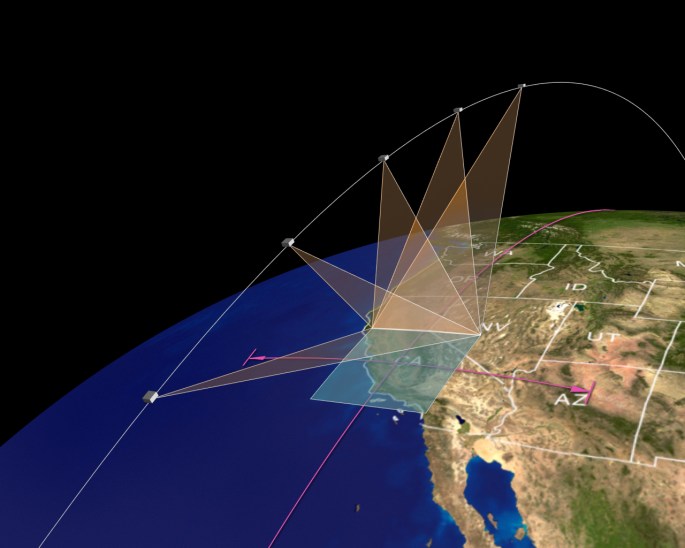
Emory Scientists Work with NASA to Map Air Pollution and its Impact on Health. Cool!

This attempt to map air pollution composition and concentrations over dozens of global megacities is fascinating. The map can differentiate different pollutants. By overlaying the map with population health records they will be able to make connections between different particulates and health problems, such as cardiovascular, respiratory, and cancer. With this future mapping, hopefully scientists will be closer to understanding the connection between airborne particles and human health, to prevent illness in people like me.

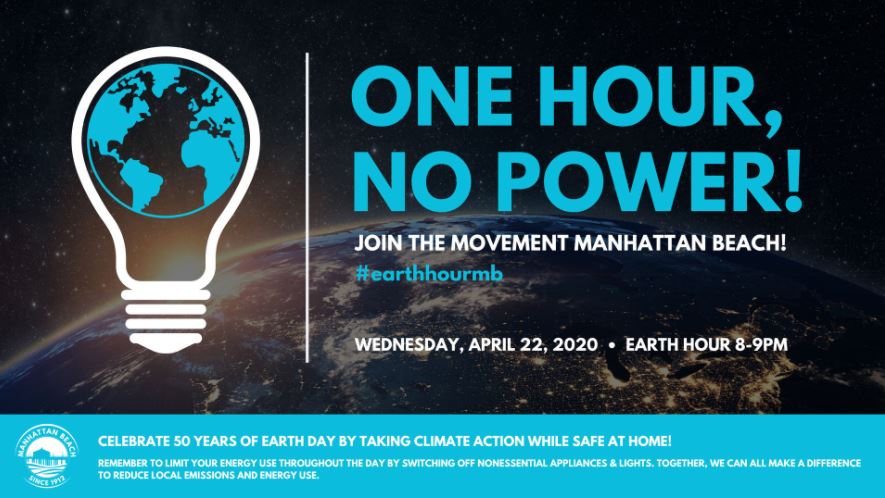
Manhattan Beach Celebrates Earth Month 2020 During Covid-19 and Prevention Strategies for a Healthier Future

It is hard enough to bring awareness to a cause, let alone during a pandemic. Manhattan Beach is doing just that. I live in an extraordinarily beautiful place, and if anybody is looking for ways to stay busy while being safe at home, there are many ways to protect the environment.

On 4/22/2020, everybody can turn off al nonessential electricity. Everyone can celebrate Earth Hour by conserving during this time.

On 4/25/2020 there will be a virtual South Bay Eco Festival. Ocean pollution will be discussed, including rain runoff and plastic leaching. These health issues affect us all. That said, we should all learn and promote policies that create a better future.

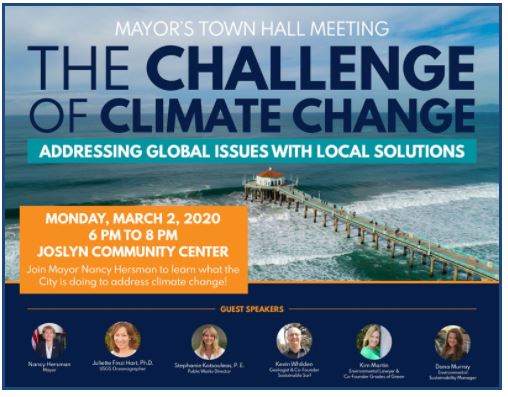
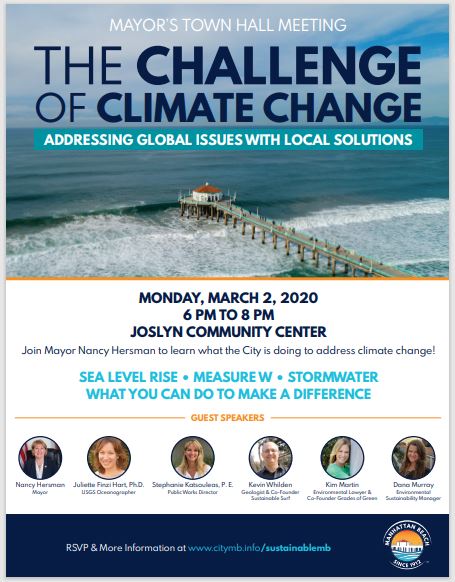
My Hometown Mayor in Manhattan Beach Nancy Hersman Hosts Town Hall Meeting Addressing Global Issues with Local Solutions

My hometown prides itself as an environmental leader in terms of health, sustainability and resiliency. The city proactively addresses climate change, sea level rise, extreme high tides, and coastal erosion. The meeting will address sea level rises, how stormwater affects the environment, what the City is doing in response, and how each person can contribute to a sustainable city and world.

Everybody should attend if possible. I know I will if possible.