
It has been suggested that 1 in 5 people are predisposed to getting cancer. Of course, this doesn’t mean that a person will actually get this horrible disease. Many variables, particularly environmental in nature, can trigger a genetic predisposition. With zebrafish, this is just one of the many fascinating possibilities which can be discovered and ultimately lead to better treatments and cures.
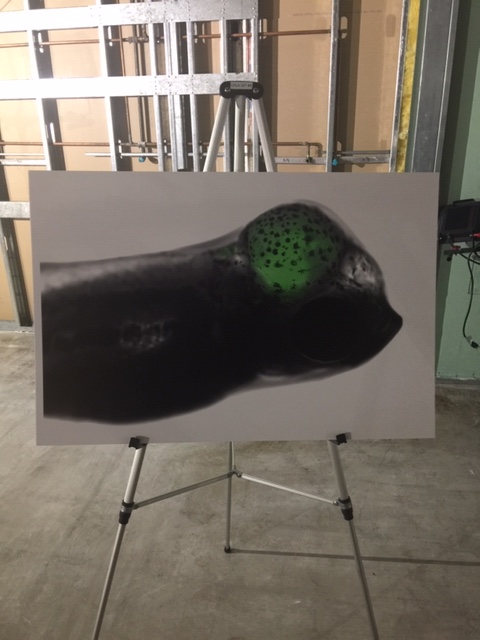
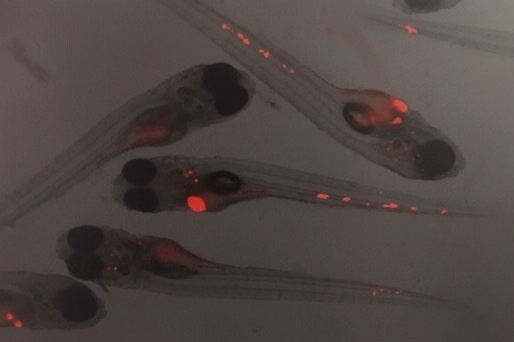
I am fortunate to be involved with Children’s Hospital Los Angeles, and by proxy the University of Southern California Keck School of Medicine. The Alfred E. Mann Family Foundation just funded a new zebrafish laboratory, headed by Dr. James Amatruda, MD, PhD. Zebrafish are small tropical fish which bear a surprising similarity to humans. More than 70% of human disease genes are evident in the zebrafish genome, including more than 80% of genes associated with human disease. They share similar immune systems, brains, digestive tracts, etc. They are transparent, cheap to feed, take up little space, and produce a lot of offspring. Cancer and internal development is visible (see photos below). They are a great model for understanding the biology of disease and also for testing new treatments. It possible to test on a large scale hundreds or thousands of disease-causing genes. This means that different environmental factors can be tested to determine if they trigger cancer.
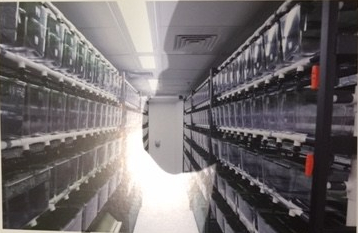
Here are some photos of Dr. Amatruda’s new lab under construction which will contain thousands of zebrafish. The possibilities are remarkable and endless:




 Environmental Science and Its Application to Health